The Last Maker of Kitayama Tea: Inside Kida Tea House, Hino
A district at the foot of Mt. Watamukai once had twenty tea-growing families. Today it has one. Kida Mitsuo runs the last working Kitayama tea farm — and he is openly looking for someone to inherit it.
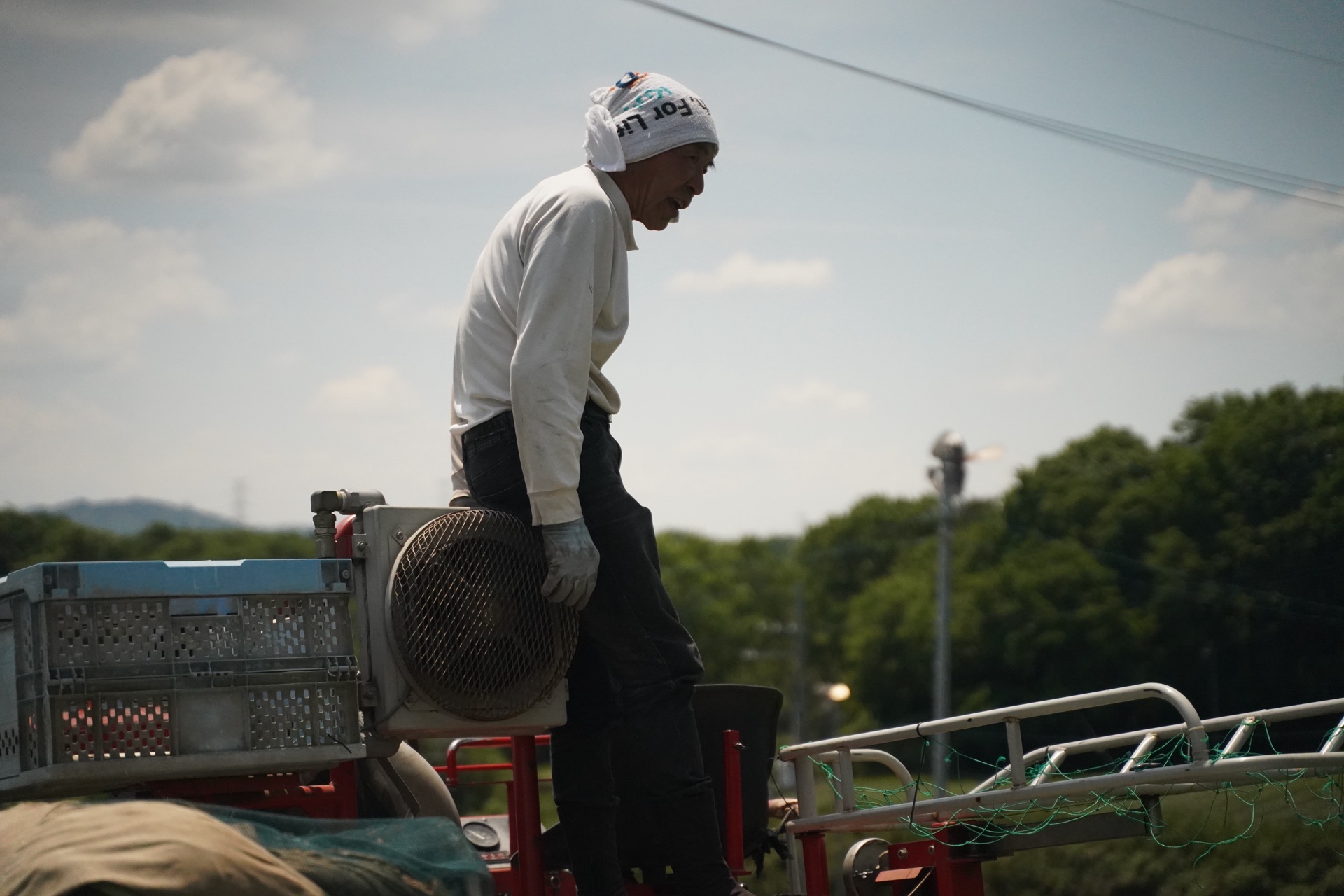
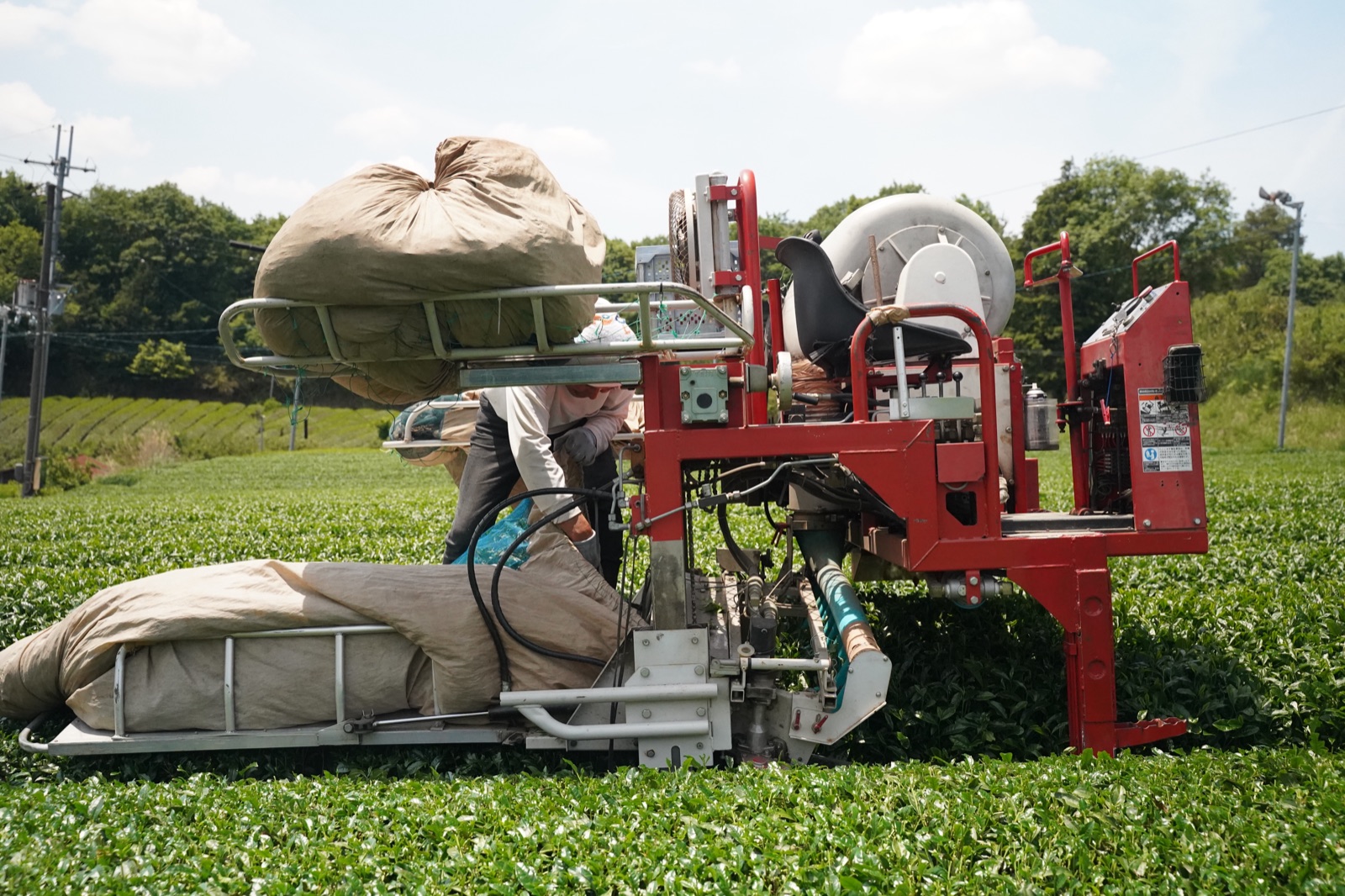
On a humid June morning at the foot of Mt. Watamukai, the air smells of cut leaf and wet clay. A single tea-picking machine works down a row that twenty families once tended together. The man riding it is in his sixties, alone — the last farmer in a Kitayama tea tradition that, by local accounts, once reached the imperial court.
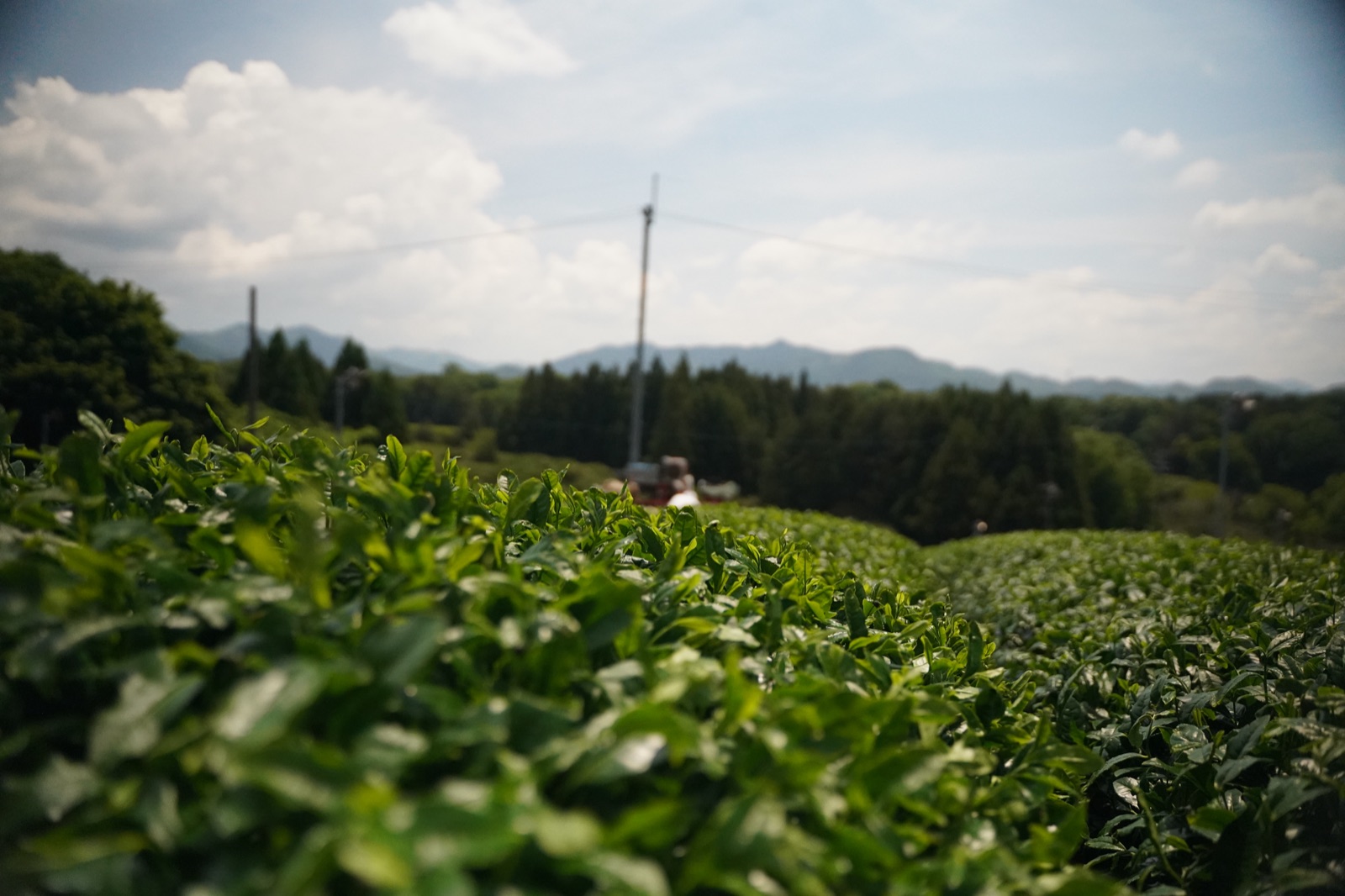
You can drive past Kida Tea House without noticing it. No English signage. No shop window. No road sign. The road into Kitayama — a small district in Hino, eastern Shiga — narrows past the rice fields and rises gently toward the foot of Mt. Watamukai (綿向山, 1,110 m). The earth changes color underfoot: a dense, rust-yellow clay that holds water and slows growth. Then, on a hillside, the rows appear. Glossy, low, dark-green tea bushes. Quiet.
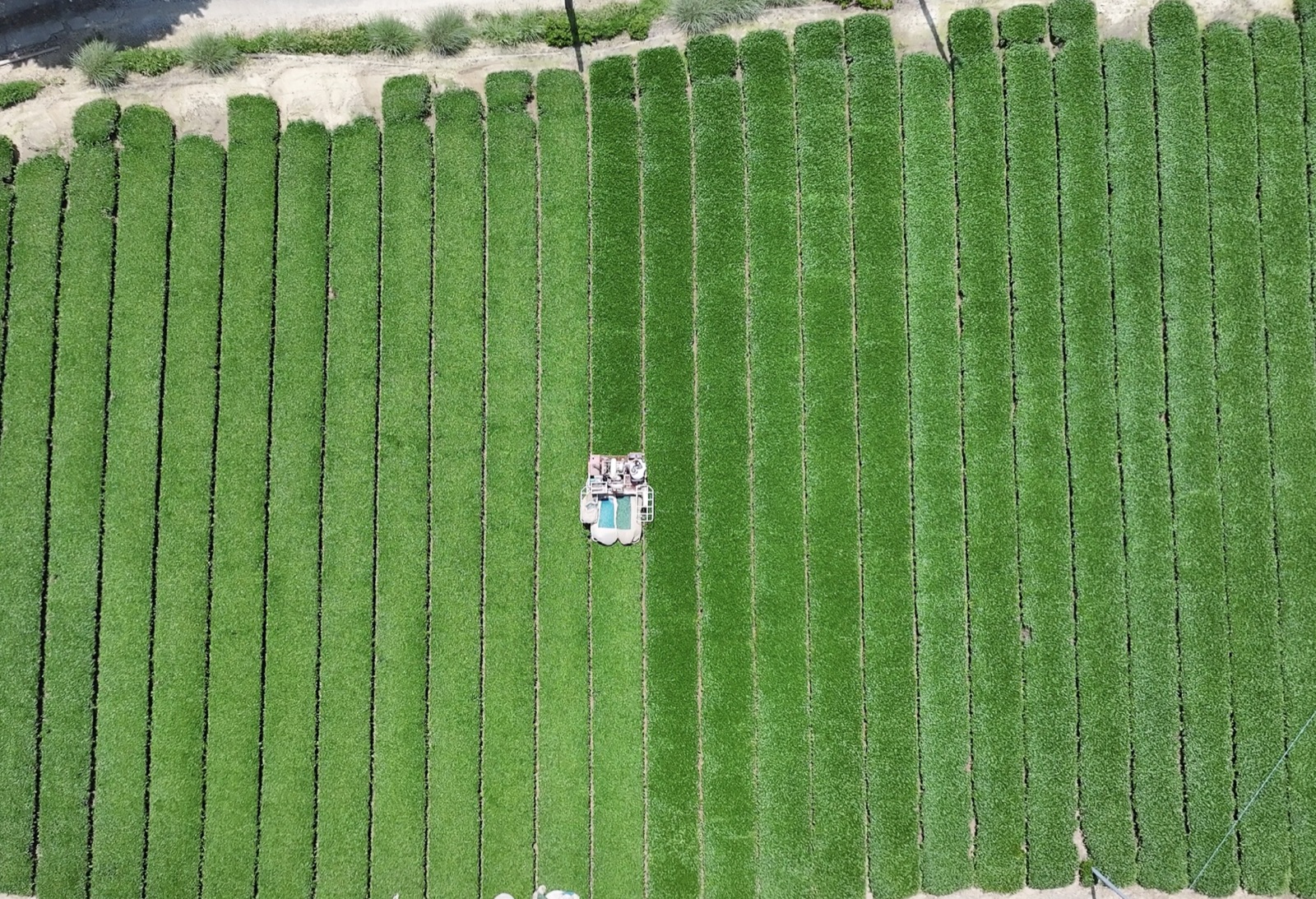
The farm has been here in its current form since 1976. The regional tea designation behind it dates to 1947, when the Shiga prefectural government chose Kitayama as a pilot zone for tea cultivation. Twenty families joined. Three forces — Japan's shrinking tea-drinking population, low wholesale prices, and a pandemic — took them out one by one. As of 2026, Kida Tea House is the only Kitayama tea farm still operating. Mr. Kida grows the tea, processes it, and sells it himself, on about six hectares of mountainside.
The short version: Kitayama tea is a small Shiga green tea — both sencha (full-sun) and kabusecha (partial-shade) — grown in the red-clay foothills of Mt. Watamukai. Local accounts trace the tradition back to medieval imperial offerings; the cooperative-era designation behind today's farms dates to 1947. Twenty families have dwindled to one. Kida Mitsuo, the current owner, is openly looking for a successor — including through a 2020 crowdfunding campaign — and is glad to have English-speaking visitors meet the tradition while there is still a farm to visit.
The maker: Kida Mitsuo
Kida Mitsuo (木田 光夫)
Farm: Kida Tea House (木田製茶) — operating since 1976
Land: About 6 hectares of tea fields on Kitayama hillsides
Region: Kitayama district, Hino, Gamō, Shiga Prefecture
Specialty: Kitayama-cha (北山茶) — kabusecha and sencha
Public point of contact (per the 2020 Campfire campaign): Taniguchi Tomoya, on behalf of Kida Tea House
Mr. Kida is a generational tea farmer. The Campfire campaign he launched in 2020 — "Please help the last Kitayama tea farmer" — opens with a number: that year, the wholesale price for his tea had fallen to roughly a third of the year before, the pandemic landing on top of decades of declining Japanese tea consumption. He raised ¥531,500 against a goal of ¥500,000 — six percent over target. Six years later, he is still here, still farming.
He is also, openly and on the record, looking for someone to inherit the farm.
The place: Kitayama, at the foot of Mt. Watamukai
Hino is a town in southeastern Shiga, in the Gamō district. Kitayama sits roughly in the middle of it. From the town center, the road climbs into a small valley framed to the east by Mt. Watamukai (1,110 m). The soil here is a red-yellow clay (赤黄色土) — a heritage of the area's geology — dense, water-retentive, slow-draining. For most crops it would be a problem. For tea, it slows the plant just enough to deepen the flavor. The morning fog off the western foothills, the sharp day-night temperature swings, the long winter dormancy: they all add up.
The local accounts go further back than 1947. Hino's records describe Kitayama-style tea as a medieval offering to the imperial court — high-quality leaf grown by a small number of farms tucked into these hills. That history is the reason Shiga Prefecture singled out Kitayama, of all places, as a pilot tea zone in 1947, when the postwar government was rebuilding rural agriculture.
Twenty families joined. Then the country's tea-drinking habits shifted — to bottled green tea, instant tea, foreign coffee. Wholesale prices for unbranded leaf collapsed. Each year, a family aged out and no one took over. By 2020, Mr. Kida was the only one still pressing tea in the Kitayama cooperative facility.
Why Kitayama tea is different
The two famous Japanese teas — Uji (Kyoto) and Sayama (Saitama) — take most of the English-language attention. Hino-Kitayama tea is small, old, and unbranded outside Shiga. Among Shiga drinkers, Kitayama tea is described as having a deeper, fuller body than the average sencha: partly the red-yellow clay, partly the temperature swings off the Watamukai foothills, partly the fact that one family grows and processes every hectare and knows it.
Kida Tea House makes two main lines:
- Sencha (煎茶): Full-sun green tea. Bright, grassy, with the structural body that the Kitayama soil lends it.
- Kabusecha (かぶせ茶): The fields are covered with shade netting for roughly two weeks before harvest. The shading slows photosynthesis, raises theanine (the amino acid the palate reads as umami and sweetness), and lowers catechins (the compounds responsible for astringency). The cup is softer, rounder. Kabusecha sits between sencha and gyokuro — closer to gyokuro's umami depth at a fraction of the price.
What Mr. Kida is asking for
This part is unusual in a Japanese tea profile, so it's worth quoting him directly. From a recent conversation:
What he is offering is essentially the full farm: fields, processing equipment, the cooperative facility, the relationships with the wholesalers and with the town. The trade name (the shop sign) is negotiable, he has said. He is firm on only one point — the name "Kitayama tea" (北山茶) should be preserved. The geographic name is the heritage, and it should not go private to a new brand.
He is realistic about who might come. Probably not a first-time farmer with no agricultural experience. More likely a younger Japanese tea worker who already knows leaf and process; a tea trader looking to vertically integrate; or — and this is genuinely on his list — a foreign tea enthusiast with a workable visa pathway and a real long-term commitment to Japan. He has not closed any door.
What is kabusecha, for first-time drinkers
If your reference for "Japanese green tea" is a teabag in a US or European café, kabusecha is in a different category. The short version:
- Sencha is the everyday Japanese green tea — grown in full sun.
- Gyokuro is the high end — roughly three weeks under full shade before harvest. Intensely umami, almost marine, expensive.
- Kabusecha sits between them. About two weeks under partial shade. Less astringency than sencha, more amino-acid sweetness, more depth on the palate. Close to gyokuro at sencha-adjacent prices.
The science is straightforward. Shading slows photosynthesis. The plant produces fewer catechins (the compounds responsible for astringent bite) and more theanine (the amino acid the palate reads as umami and sweetness). The cup turns softer, rounder, more layered.
Kida-san's kabusecha is hand-handled at every step that matters. This is not a hundred-tonne industrial operation. Six hectares, one family, every field known by name.
How to buy Kitayama tea
Kida Tea House is a small direct-sale farm, not an e-commerce shop. Hino is also a designated furusato nōzei (ふるさと納税, "hometown tax") area for Kitayama tea — meaning Japan-based supporters can receive it as a tax-deduction return gift through the town's official channels.
| Farm | Kida Tea House (木田製茶) |
|---|---|
| Operating since | 1976 (current ownership), with the regional tea designation dating to 1947 and local accounts of imperial-court tea production from the medieval period |
| Region | Kitayama district, Hino, Gamō District, Shiga Prefecture, Japan |
| Products | Kabusecha (覆い茶 / shaded green tea) and sencha (煎茶 / sun-grown green tea), both labeled Kitayama-cha (北山茶) |
| Direct purchase | In person at the farm or by direct contact. International shipping is not currently offered. |
| Through furusato nōzei (Japan residents) | Available as a return gift from the Town of Hino. Search: 日野町 ふるさと納税 北山茶 |
| 2020 crowdfunding | "Save the Last Kitayama Tea Farmer" raised ¥531,500 against a ¥500,000 goal (106%) on Campfire. The campaign is closed; the rewards (200g of Kitayama tea + a handwritten letter at ¥1,000) are no longer available, but the campaign page remains a strong English-translatable summary of the story. |
| For introductions / serious purchase enquiries | editor@discover-shiga.com — we'll forward to Kida-san directly. No commission to us. |
How to get to Hino from Kyoto
Hino is southeast of Lake Biwa, off the major JR lines. Getting there feels like crossing into rural Japan, which is the point. Two practical routes:
- JR + Ōmi Railway: JR Biwako Line from Kyoto to Ōmi-Hachiman (~26 min, ¥510), then the local Ōmi Railway line to Hino Station (~40 min). About 1.5 hours door-to-door.
- By rental car: Roughly 1 hour 15 minutes from Kyoto via the Meishin Expressway and Route 477. Worth it if you plan to pair Kida Tea House with other Hino makers — sake, sweets, fermented foods — in the same day.
- Hino Station to Kitayama: About 15 minutes by taxi. Phone ahead from the station; cabs are not always waiting. Drivers know "Kitayama" (北山).
The farm itself sits on a hillside in Kitayama. For a first visit, please contact Kida-san or DISCOVER SHIGA ahead of time so he knows to expect you. Walking up unannounced is not how rural Hino works.
Interactive map to be embedded after coordinates are confirmed with Kida-san.
Plan your visit
Hino is reachable from Kyoto in about 1.5 hours but is not commonly on day-trip itineraries. If you are going for the tea, plan a half-day at minimum, and contact Kida-san or us ahead of time.
- Train pass: The JR Kansai Area Pass covers the JR Biwako Line portion (JR West official passes).
- Rental car: Practical if visiting multiple Hino makers. Reservations recommended from Kyoto or Ōtsu.
- Stay: Most travelers stay in Kyoto and visit Hino as a day trip.
- Introductions: Email editor@discover-shiga.com a few days ahead. We can pass a message to Kida-san so he knows you're coming.
This article itself is not paid. Kida-san has not paid for inclusion; we have not received compensation. When direct-purchase or affiliate links go live, this section will clearly disclose any commercial relationships.
FAQ
Down on the valley floor, the Kitayama cooperative pressing facility was built for the twenty families who joined in 1947. Today it presses for one. The same building, the same machines, the same path from leaf to bag — just one set of hands. Most days, Kida-san walks through it alone.
Where this story goes next
This is the first profile in Makers of Shiga, a series we are starting because Hino — and Shiga more broadly — is full of makers whose names don't travel well in English. Tea, sake, fermented food, sweets, ceramics, regional crafts: most of them are family operations a generation or two from disappearing.
We are visiting them. We will publish profiles like this one as we go.
If you are a serious tea buyer, a craft journalist, or someone who has actually thought about leaving city life in Japan to take over a working tea farm — Kida-san is here, and we can introduce you.
Related reading
- Hikone Castle: A Local's Guide →
- Metasequoia Road in Summer →
- Day Trip from Kyoto to Shiga →
- About the people behind this site →